

For over a century, the sprawling network of red granite roads winding through central Wisconsin served simply as the quiet, unpaved arteries for dairy farms and logging camps. But this June, nearly 900 miles of those historic paths will take on a new life as the “Granite Belt.” By connecting and branding these existing rural routes, local leaders are transforming the region’s diamond-hard gravel into a first-of-its-kind trail system—and cementing Wausau as a premier destination for the fastest-growing cycling trend in the nation.
Debuting this June, the Granite Belt is the flagship region of a new “Wisconsin Gravel” initiative, marking the state’s first organized gravel trail network. Spanning a five-county area with Wausau serving as its “base camp,” the roughly 890-mile system requires virtually no new construction. The concept is simple but entirely new to the state: take nearly 900 miles of existing, unpaved public roads across five counties and link them into a curated, 13-route destination called the Granite Belt.
“Nobody’s ever done branded trails using existing roads in the state,” said Bill Bertram, recreation consultant and president of the Wausau and Marathon County Parks Foundation. “The cost is virtually nonexistent, just creating trailheads, developing the website and then working with the different communities.”
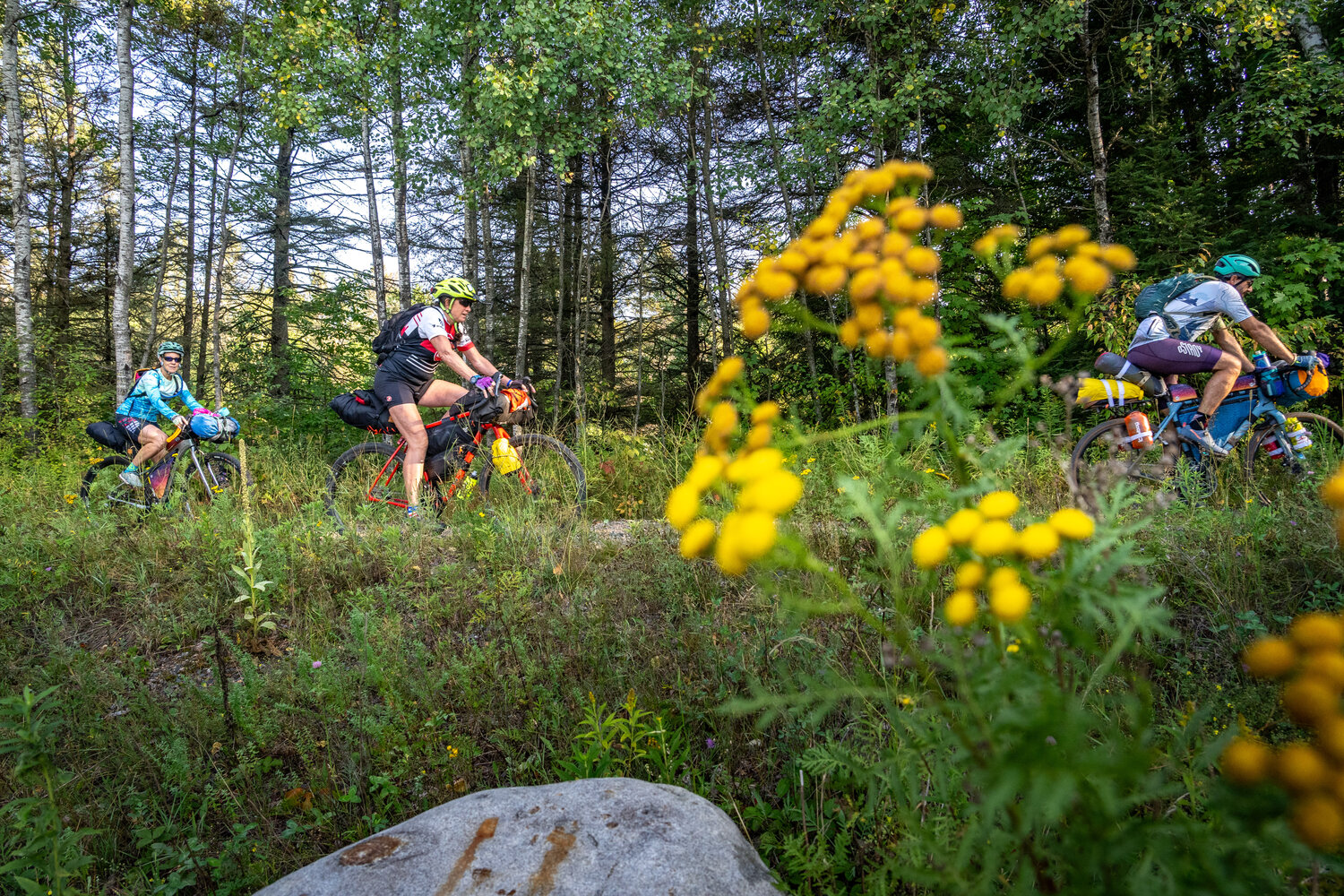
It’s a massive, low-cost infrastructure project designed by local tourism and recreation leaders to guide riders through central Wisconsin’s picturesque landscape and directly to the doorsteps of rural taverns, historic barns and small-town businesses. By organizing existing dairy and logging roads under a single digital and physical wayfinding brand — part of the broader “Wisconsin Gravel” initiative — local leaders aim to capture the surging national demographic of gravel cyclists, transforming the region’s unique geology into a year-round economic engine for rural trail towns.
“Most of these trails, when we laid them out, we try to lay them out around bars and out into the country. There are two things bikers love: they love beer and they love ice cream,” Bertram said. “So we try to lay those out around so that they get stop at taverns and have local beers.”
In the biking world, Bertram said road biking and mountain biking are declining, mostly due to safety reasons, while gravel trail biking is experiencing “double-digit” growth. The foundation of this trend, and the new Granite Belt, lies literally in the dirt. Unlike the loose, limestone found in other parts of the Midwest, central Wisconsin sits on an ancient bedrock of red granite. This unique geologic makeup makes the region’s rural dairy and logging roads exceptionally suited for two wheels.
“We have some of the oldest geologic rock in the world. Rib Mountain is 1.7 billion years old,” Bertram said. “What makes the gravel here exceptional is that granite is like a diamond, it’s a faceted stone. It interlocks on itself, so when it compacts, it compacts about 95% of the compactability of asphalt without all of the other bad stuff that asphalt has with it.”
“The drainage is amazing, it makes it easy to grade,” said Tim White, executive director of Visit Wausau. “That’s why the townships, you know, keep using this red granite.”

When it comes to economic impact, White said the trail system will draw bikers from across the Midwest and the greater U.S. to participate in local outdoor recreation. But due to Wausau’s unique rural-urban mixture, White expects those visitors will discover the city-side restaurants, entertainment and shopping during their outdoor-focused trip.
“You just don’t have that in a lot of places,” White said. “We bring people in for the outdoor rec, but then they’re always shocked that we have three art museums and we’ve got The Grand Theater and we have enough decent restaurants to give them an urban experience. The value, cost-wise, is amazing.”
Navigating the Granite Belt is as easy as getting on your bike and pulling up the Ride with GPS app, which details the Granite Belt’s 13 trails and can guide bikers to any destination and back home along those routes. The app, in addition to the signage (which includes route markers as well as points of interest) is all designed to make bike travel more accessible to everyone.
“It’s waymaking,” White said. “You’re able to show a person: you can do this, you’re not gonna get lost. Plus, we’re making it interesting by not only putting up historical signage and small profiles, too, but also, Rise Up has already done barn art. We’re going to engage our arts community to do more art along these trails as well.”
“The data shows us that millennials and Gen Z-ers like to stop along the way to get educated on what was in this area,” Bertram added.
For example, there are 13 distinctive architectural barn styles in the U.S. and the five-county area of the Granite Belt features every style.
“There’s Dutch barns, there’s English barns, there’s round barns,” White said. “We’re really fortunate to market those areas as well as the art, so this thing will just get richer and richer in terms of content to bring bikers back year after year, after year.”
While the trails are still snow-covered, the Granite Belt is already making a local impact. Wausau was chosen to host the Healthy Communities Summit next month, where world-changing thinkers and innovators in the outdoor recreation world will gather to discuss how to build and maintain healthy communities. This event is presented by the Wisconsin Bike Fed and the Wisconsin Office of Outdoor Recreation.
“It’s going to be one of the first times we’ve had them up here,” White said.
There have already been discussions about “winter-proofing” the trails to maintain revenue and use during colder months. Right now, fat-tire biking will be promoted during the winter. The wide, low-pressure tires are ideal for riding across packed snow without sinking in.
With signage up and maps available in the Ride with GPS app, the trails are ready to see regular bike travel once the snow clears. That said, there will be a grand opening for the Granite Belt Trail system on National Trail Day, June 6.
For now, the red granite remains quietly tucked beneath the winter snow. But when the Granite Belt officially opens this spring, riders will find themselves pedaling through more than just scenic countryside. They’ll be riding on 1.7 billion years of geologic history, transforming the quiet dairy roads of the past into the Midwest’s premier cycling destination of the future.
For more information on the Granite Belt, visit wisconsingravel.org.


Comments
No comments on this item Please log in to comment by clicking here